In many American homes, mops, brooms, dustpans and small brushes slowly move to corners of laundry rooms, pantry floors, garage edges and rental-kitchen nooks. A simple wall fix will make it easier to grab, easier to dry and less likely to block the floor when it’s time to clean those everyday tools. These storage tips are small, practical changes: hang bristles upright, give the dustpan its own hook, separate wet tools from dry, and utilize narrow wall space that often goes unnoticed. All of the ideas are visual, low cost and easily adaptable for apartments, utility closets, garages and active family homes.
Mount the Mop Where It Can Dry Upright

This wall habit can get a wet mop out of the corner.
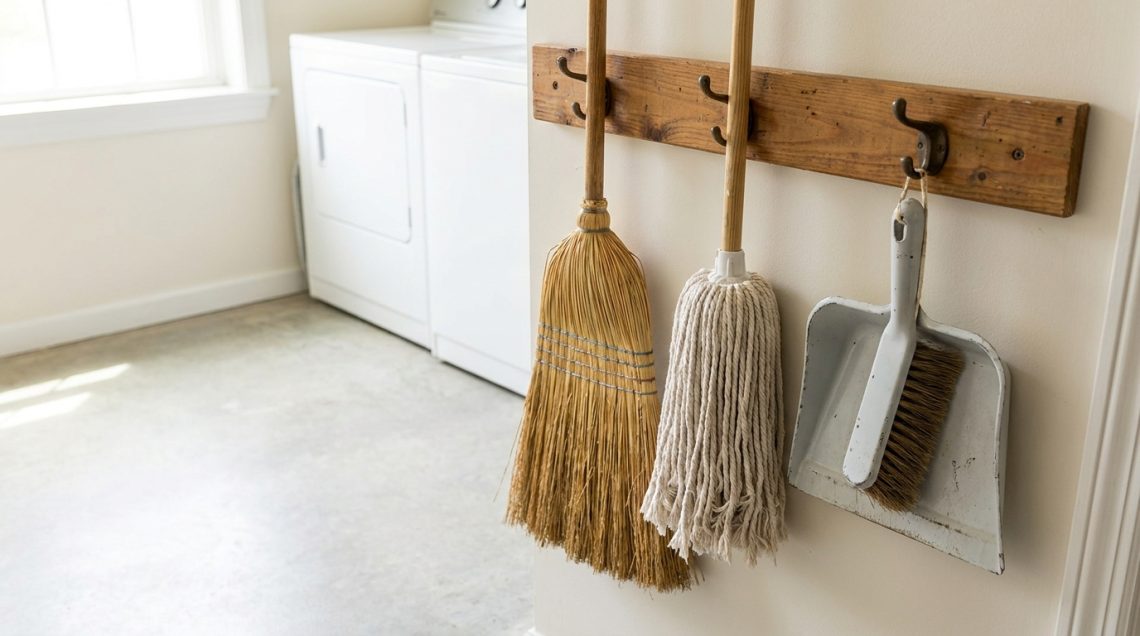
A mop standing head down in a corner of the laundry room can be awkward, block the floor and make the area feel less fresh than it needs to. In many U.S. homes, a wall-mounted gripper or simple hook provides a defined place for the mop while keeping the head off the floor. This allows the tool to dry more freely and be easier to pick up before spills create a mess in your kitchen or mudroom. The trick is to find a spot with airflow, not a tight corner behind hampers or boxes. It’s a small storage fix, but it changes the whole routine, the mop is visible, upright, and no longer a part of the floor clutter.
Hang the Broom So Bristles Do Not Bend

A broom laid on its bristles may not be long kept clean.
If you have a broom that is stored bristle-side down in a corner of your kitchen or garage, the bristles can get splayed or uneven over the years. If you hang it by the handle, the broom will be in a cleaner resting position and the floor below will be easier to sweep. This is especially useful in a typical American home near back doors, pantries, laundry rooms and garages where quick sweeping occurs often. One hook, peg rail or broom gripper can make a floppy corner tool look as if it was made that way. The payoff is simple: less clutter on the floor, straighter storage and a broom that’s easier to grab without knocking over the mop.
Give the Dustpan a Hook Beside the Broom
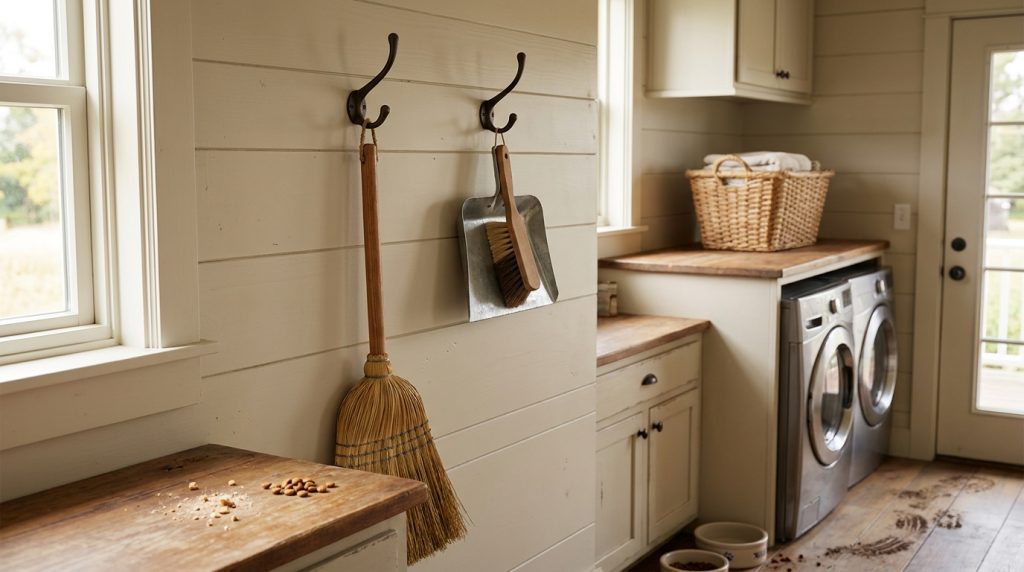
Typically the dustpan is what breaks the setup.
Dustpans tucked behind a trash can or balanced on a mop bucket sliding around on the floor don’t look complete on a broom rack. In many American kitchens and laundry rooms, the best solution is to give the dustpan its own little hook next to the broom. Which keeps the duo together, so that quick cleanups after breakfast crumbs, pet food or tracked-in dirt don’t become a search. It also prevents the dustpan edge from collecting dust on the floor. The aim here isn’t a fancy closet makeover, it’s the simple habit of pairing. But when the broom and dustpan live together, the entire wall zone is more of a cleaning station.
Move Cleaning Tools Out of the Laundry Room Corner
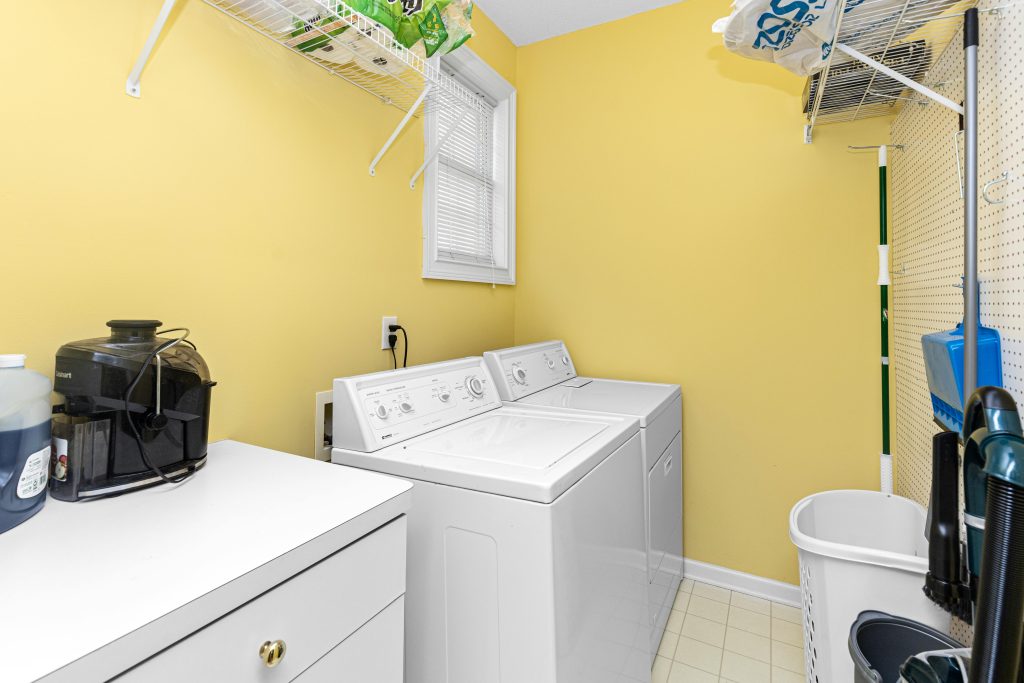
That corner of the laundry room might be working too hard.
Laundry rooms tend to be the drop zone for every long-handled tool: broom, mop, duster, squeegee and sometimes a bucket as well. It’s not always the number of tools but that they all lean into one corner and make the floor harder to use. A wall rail can convert that pile into a vertical row, creating space for hampers, a step stool or a quick sweep under the washer area. It’s one of the easiest storage upgrades in many suburban homes and rentals as it does not require a full closet. Keep the most used tools at hand height, leave the bucket below if necessary and let the corner breathe again.
Use the Inside of a Utility Closet Door
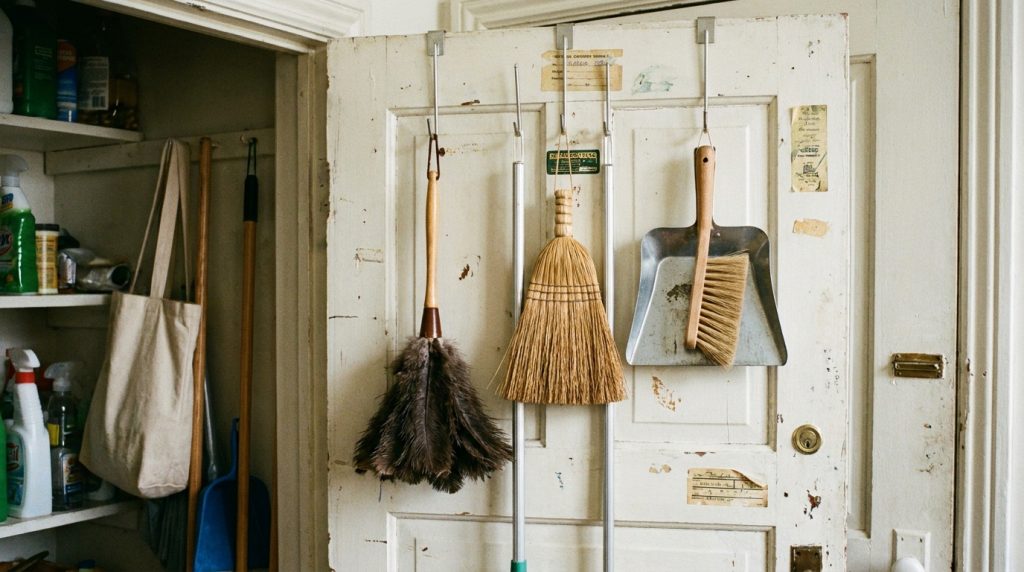
The closet door can hold more than you might think.
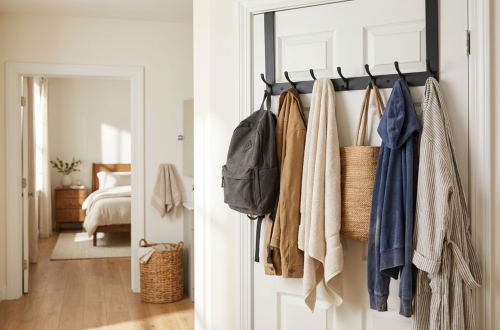
Inside-door storage is easy to overlook, because most people look at the shelves and floor first. But in many U.S. apartments and older homes, the back of a utility closet door can hold lightweight cleaning tools that otherwise would clutter a corner. A small broom, dustpan, duster or scrub brush may fit neatly on adhesive hooks or a slim rail, as long as the door still closes cleanly. It is ideal for lightweight items, not heavy buckets or large tools. The advantage is immediate visibility. Open the door, take what you need, and shut the clutter away. It’s a tiny-space solution with a big daily payoff.
Create a Garage Wall Zone for Outdoor Tools

You don’t require the garage floor for your outdoor tools.
Garages quickly gobble up long-handled tools: push brooms, deck brushes, snow brushes, squeegees and yard cleanup equipment. When they lean together by the door one tool usually drags down three other tools. Outdoor tools have a dedicated garage wall zone, separate from indoor mops and dusters. That’s handy in many American homes, at the door to the driveway or the entrance to the mudroom, where grass clippings, leaves, road salt or dust are dealt with before they come inside. Wall tracks are very useful as hooks tend to move with the seasons. The aim here isn’t a perfect garage wall, but rather a clear zone that leaves enough space on the floor to sweep efficiently.
Separate Wet Tools From Dry Dusting Tools
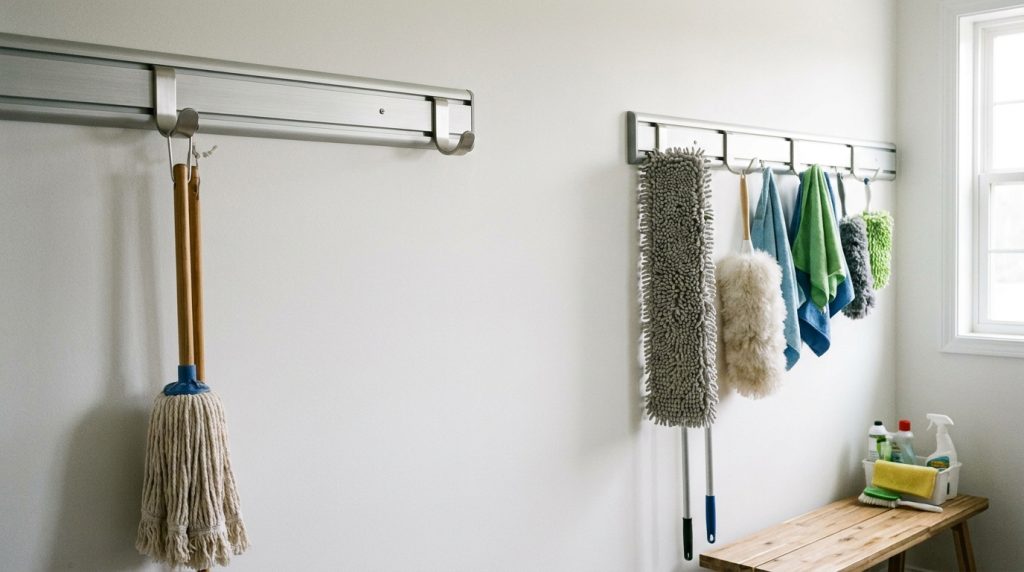
A crowded hook can make tools look messier than they are.
A mop, microfiber duster, broom, and scrub brush are all “cleaning tools,” but they don’t all belong in the same crowded spot. Many U.S. homes are better off with wet tools stored hanging out in the open, and dry dusting tools look cleaner when not pressed against damp mop heads. You don’t need a big system to do this. Even two zones on the same rail can be useful: wet floor tools on one side, dry dusting and sweep tools on the other side. The payoff is both visual and practical. Before the cleaning process begins the wall looks less cluttered, the tools are more accessible and everything is more structured.
Keep Small Brushes From Getting Lost in Buckets
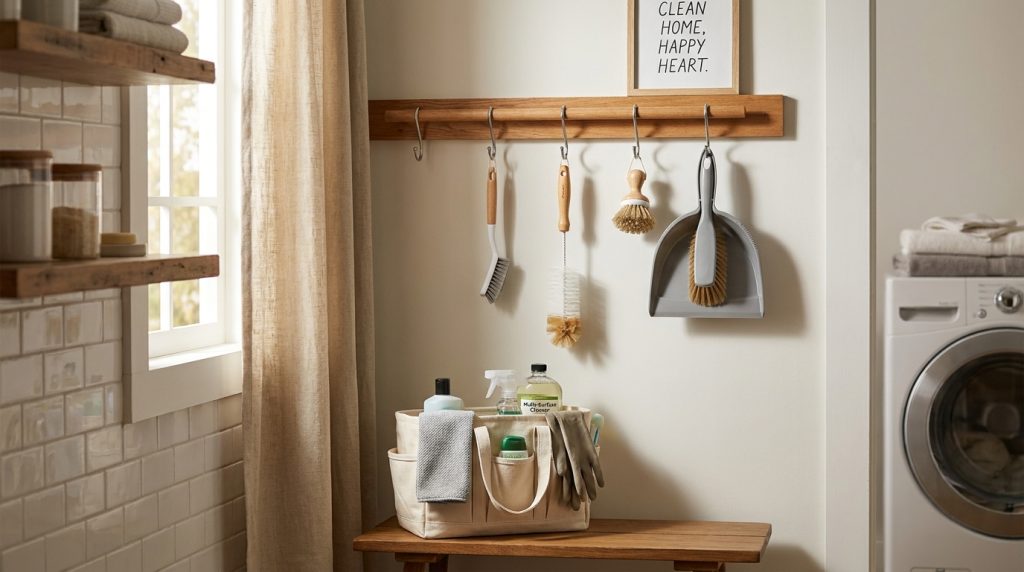
It’s usually the smallest brushes that are the hardest to find.
Little brushes, grout brushes, bottle brushes and mini dustpans tend to get lost in buckets, totes or the back of a cabinet. Then the next quick clean-up takes longer because the right tool is buried under everything else. Those smaller items don’t need another shelf when they can be seen with a couple of S-hooks below a broom rail. This is especially good for tools used weekly, but not daily, in a typical American kitchen, laundry room or apartment closet. You’re welcome to keep the bucket for hauling stuff, but stop using it as a junk drawer. When small brushes are on display, the whole cleaning setup looks more functional and less like a heap.
Use a Narrow Wall Rail for Tight Spaces
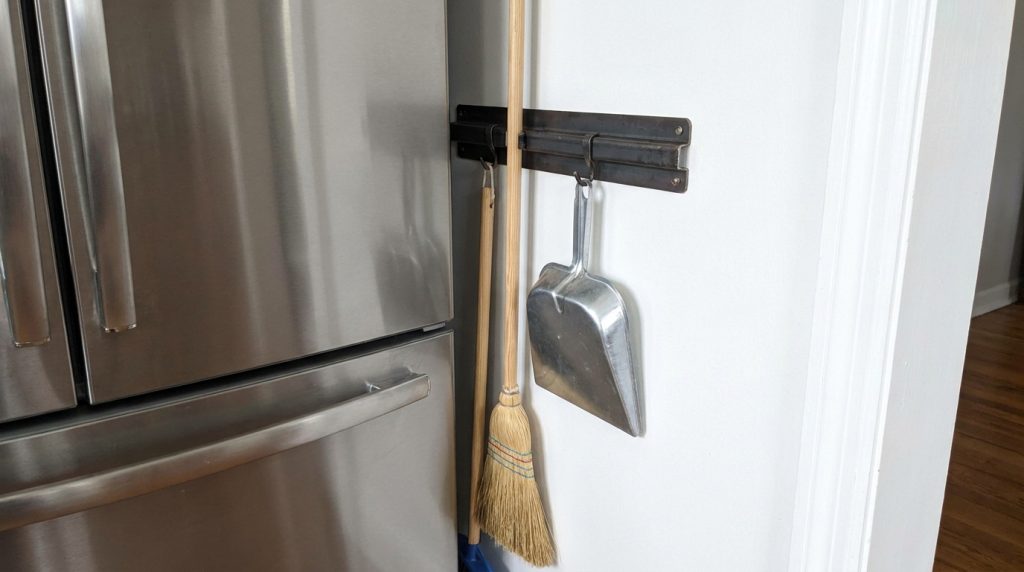
In small homes, you may not even need a closet—just a strip of wall.
Not all homes have a utility closet and many rental apartments do not have extra pantry space either. A narrow wall rail can do more that it looks like it should. The best place may be beside a refrigerator, near a back door, along a pantry side wall or in a short hallway leading to the laundry area. The trick is to keep the setup slim: broom, dustpan, maybe one mop, and nothing bulky enough to block walking space. Vertical storage can make cleaning tools seem like part of the room instead of clutter in small U.S. homes. It’s one of the easiest ways to use wall space that was already there.”
Make the Floor Clear Enough to Sweep Quickly
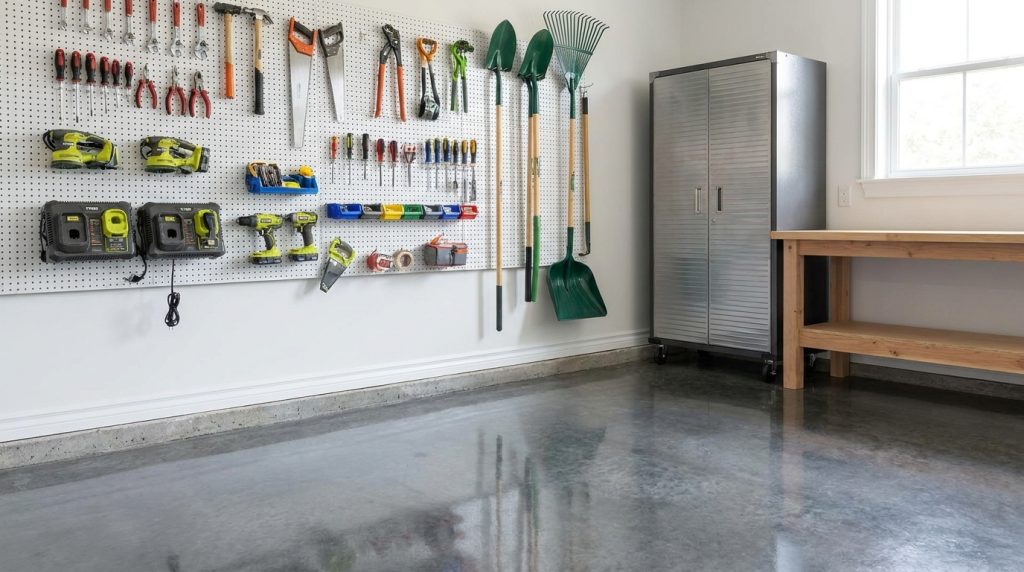
The cleaning tools aren’t on the floor, so the floor is easier to clean.
A mop-and-broom wall fix might not be so much about how it looks. It’s what happens to the floor. When handles, buckets, dustpans and brushes are not propped in a corner, it’s easy to sweep, vacuum or wipe the area below. That’s important in busy American homes where laundry rooms, garages and kitchen entries quickly collect crumbs, pet hair, leaves and dust. Also, a clear floor makes it easier to see when something has been spilled or moved. The best setup is simple. Tools in sight, hooks not overloaded and enough open floor below to clean without moving everything first. That’s the real payoff of the wall fix.