In many U.S. homes, the back of a door quietly becomes wasted space while towels, bags, jackets, backpacks, robes, and worn-once clothes land on chairs, floors, or counters. A simple over-the-door hook setup can often turn that overlooked strip of space into a useful landing zone without drilling, remodeling, or buying another cabinet. These room-by-room ideas show how bathroom doors, pantry doors, bedroom doors, laundry doors, closet doors, and even garage-entry doors can help reduce clutter, save space, and make everyday routines feel a little smoother.
The Bathroom Door Hook That Frees Up Towel Space
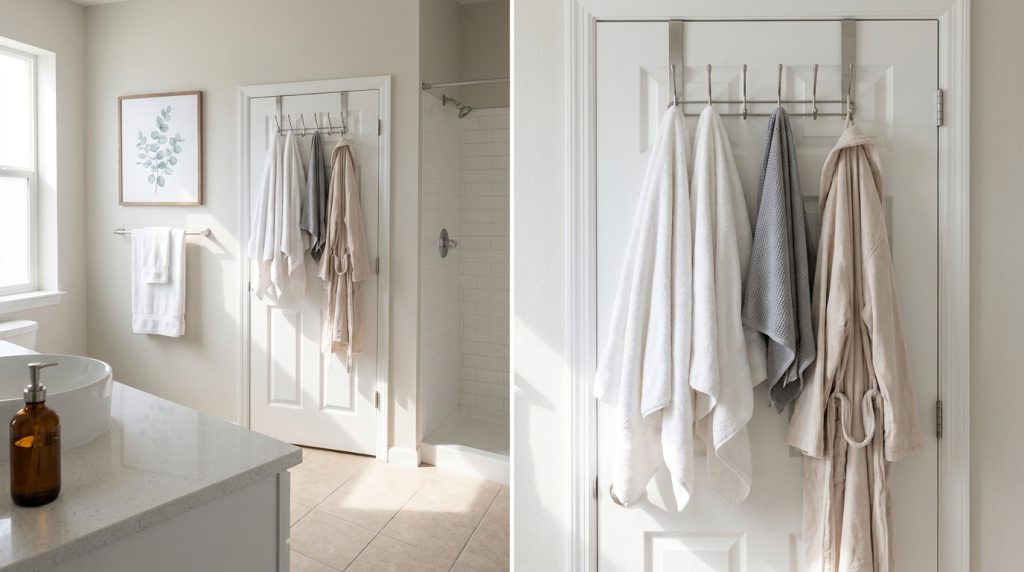
The bathroom door may be doing less than it could.
In many U.S. bathrooms, towel bars fill up fast, especially when kids, guests, gym towels, or damp bath mats are part of the routine. An over-the-door hook rack can often create a small “drying and grabbing” zone without taking up wall space or drilling into tile. The key is keeping it simple: one towel per hook, lighter items toward the center, and enough clearance so the door still closes smoothly. It works best when the hook zone is treated as temporary storage, not a second closet. That small limit helps the bathroom feel fresher and less crowded.
How an Entry Door Hook Keeps Bags Off the Floor
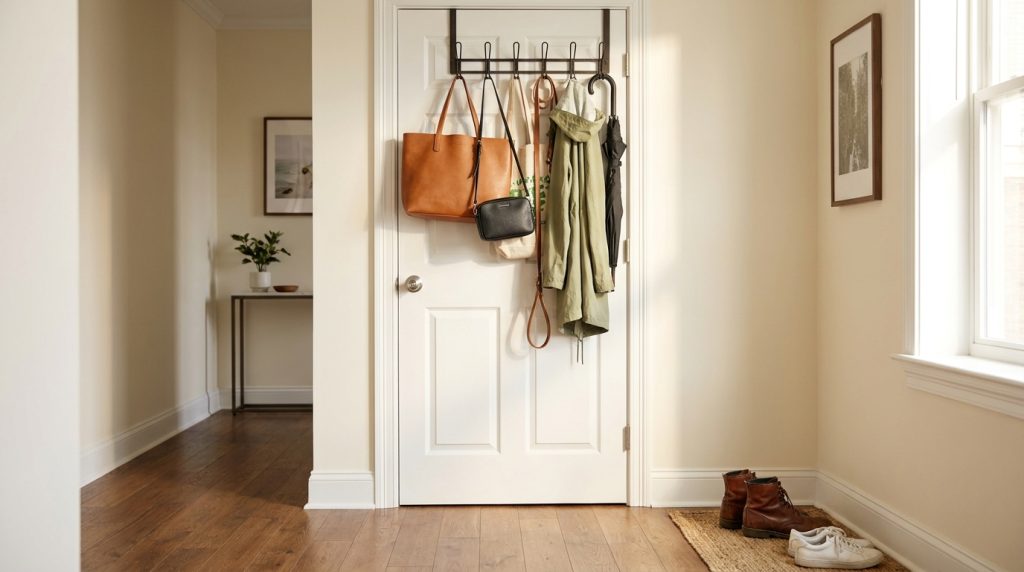
The entry floor may not need another basket.
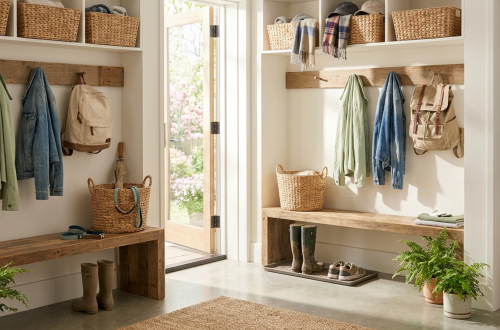
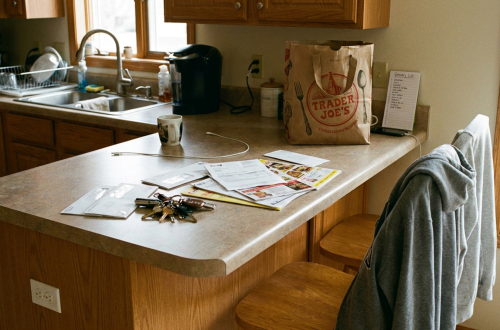
Around many American entryways, the problem is not always too much stuff; it is stuff with no quick home. A purse, work tote, dog leash, umbrella, or reusable shopping bag can make the floor feel busy within minutes. An over-the-door hook near the entry gives those items a visible place to land without blocking the walkway. It can be especially useful in apartments where wall hooks are not ideal. The best setup is limited to the few items used almost daily, so the door stays useful instead of turning into a crowded catchall.
The Bedroom Door Setup for Worn-Once Clothes
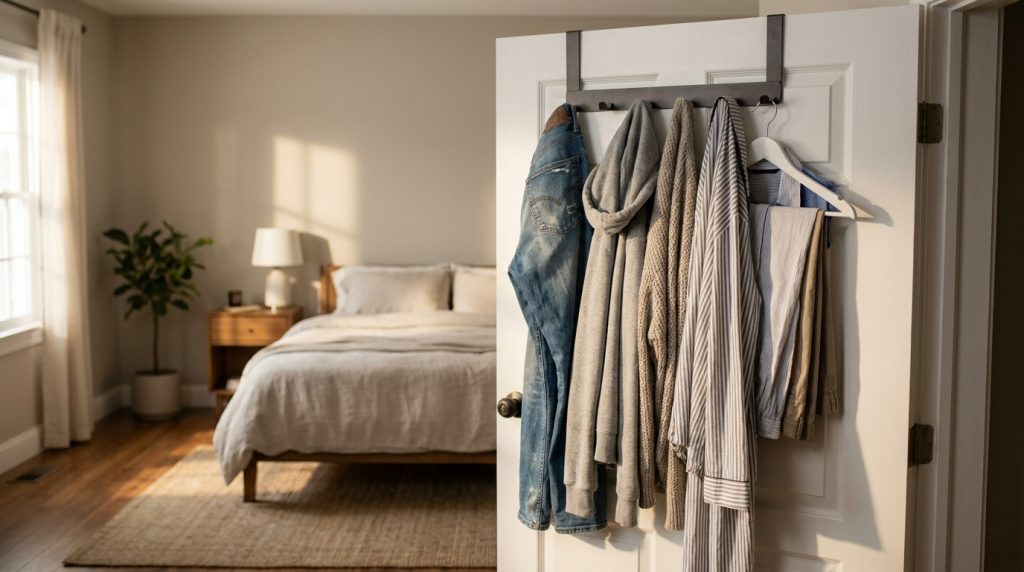
This may be the missing zone between closet and hamper.
The “worn once” clothing pile is common in real bedrooms because the usual choices feel too extreme: put it back with clean clothes or toss it into laundry too soon. A small over-the-door hook setup creates a middle zone for jeans, hoodies, cardigans, pajamas, or tomorrow’s outfit. In many U.S. homes, that can reduce floor piles and avoid extra laundry from clothes that only needed airing out. The trick is giving the zone a limit, such as three hooks or one day’s outfit, so it stays useful and does not become a hidden closet on the back of the door.
Why Pantry Door Hooks Help With Reusable Bags
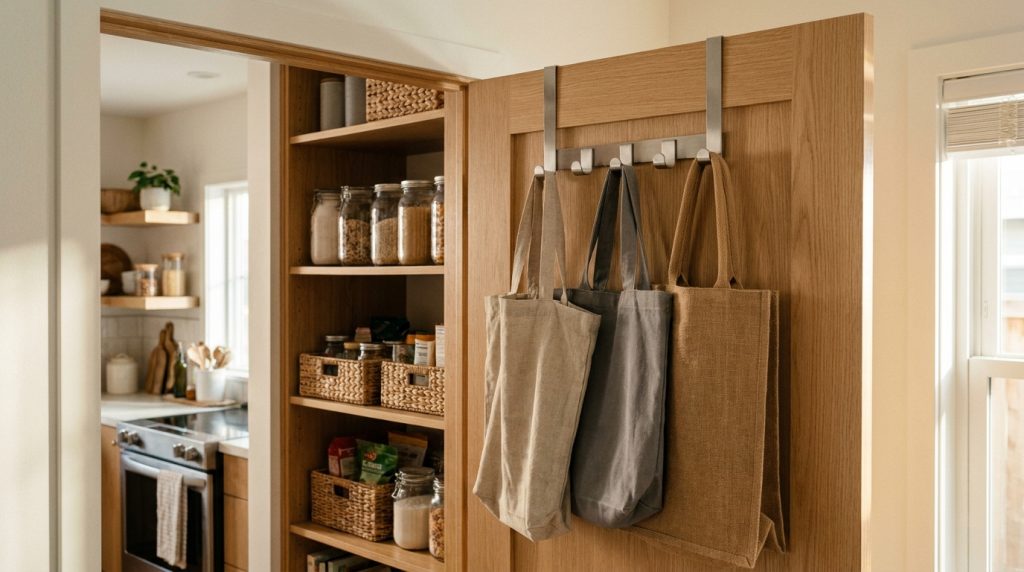
The pantry door may be the best spot for bags you forget.
Reusable bags are helpful only when they are easy to grab before a grocery run. In a typical American kitchen, they often end up stuffed under the sink, in the trunk, or inside one oversized tote that becomes hard to sort. A pantry-door hook setup keeps a few folded bags visible without taking over a drawer. It also creates a natural reset point after unloading groceries. Keep the number small, choose bags that fold flat, and avoid hanging anything heavy enough to tug the door or block shelves. The payoff is less rummaging and fewer forgotten bags
The Laundry Room Door Trick for Air-Drying Small Items
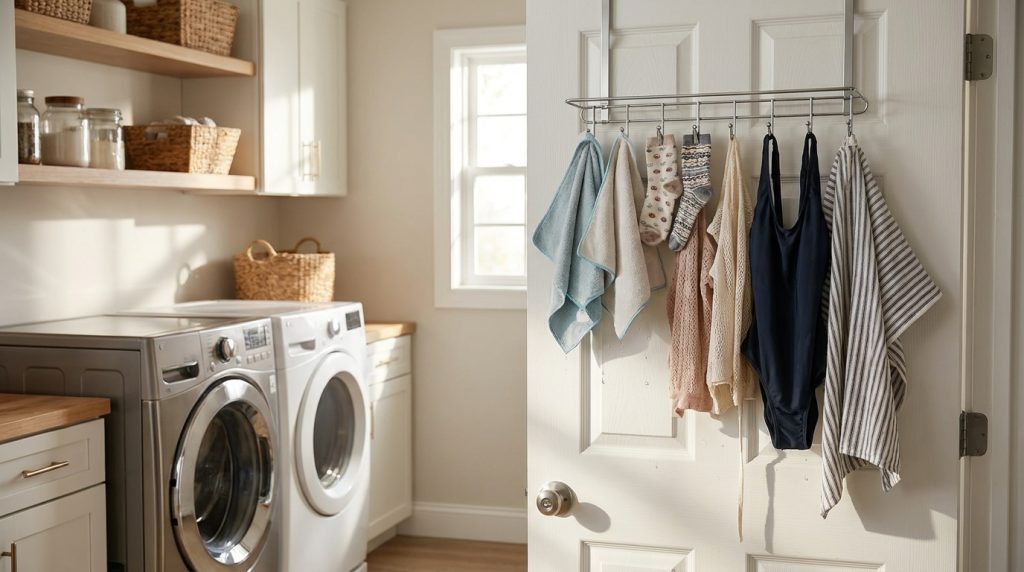
A laundry door can become a tiny drying station.
Small laundry items can create outsized clutter: damp dish towels, microfiber cloths, delicates, swimwear, or socks that need a little more air. In homes without a big laundry room, an over-the-door hook can act as a temporary drying station when paired with clip hangers or a small hanging rack. The setup should stay light, spaced out, and easy to remove so airflow is not blocked and the door still works normally. It is not a replacement for a full drying rack, but it can keep small items from landing on counters, chairs, or washer lids.
How Kids’ Backpacks Get a Better Landing Spot
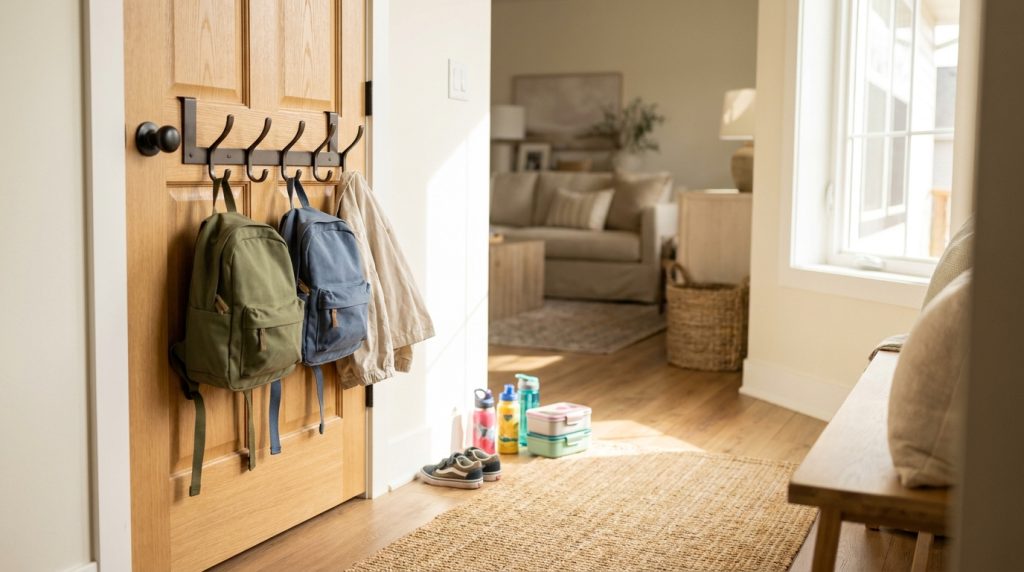
The backpack pile may need a door, not another bin.
In family homes, backpacks often land where the day ends: near the kitchen table, by the couch, or in the hallway. A door-hook setup can help, but only if it matches real routines. For kids, the hook should be low enough to reach, near the door they already use, and limited to school bags or light jackets rather than every loose item. Avoid visible names, school logos, or personal details in images. When the landing spot is obvious, the backpack is more likely to leave the floor, and the morning search for folders, lunch boxes, and water bottles may feel less scattered.
The Closet Door Hook That Keeps Tomorrow’s Outfit Ready
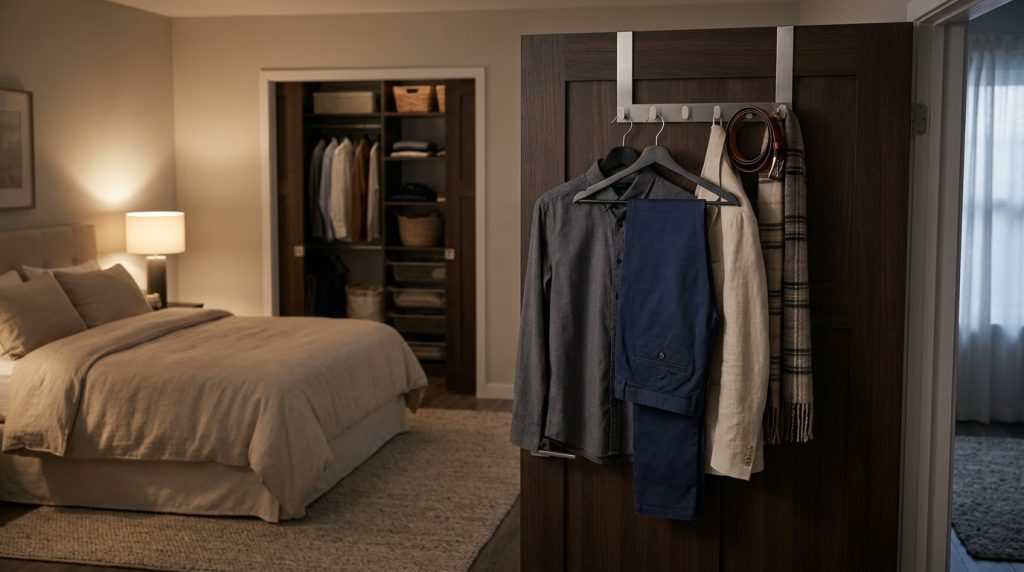
A closet door can make tomorrow easier before bedtime.
A closet-door hook is useful because it can separate “planned” from “stored.” Instead of digging through the closet in the morning, tomorrow’s shirt, pants, belt, scarf, or light jacket can sit together in one visible place. This works especially well in small bedrooms, rentals, and shared closets where drawer space is tight. The setup should stay intentional: one outfit, one bag, or one next-day grouping. Once hooks start holding random extras, the benefit fades. Used lightly, the closet door becomes a small planning tool rather than another clutter zone.
Why Robes and Jackets Need Their Own Hook Zone
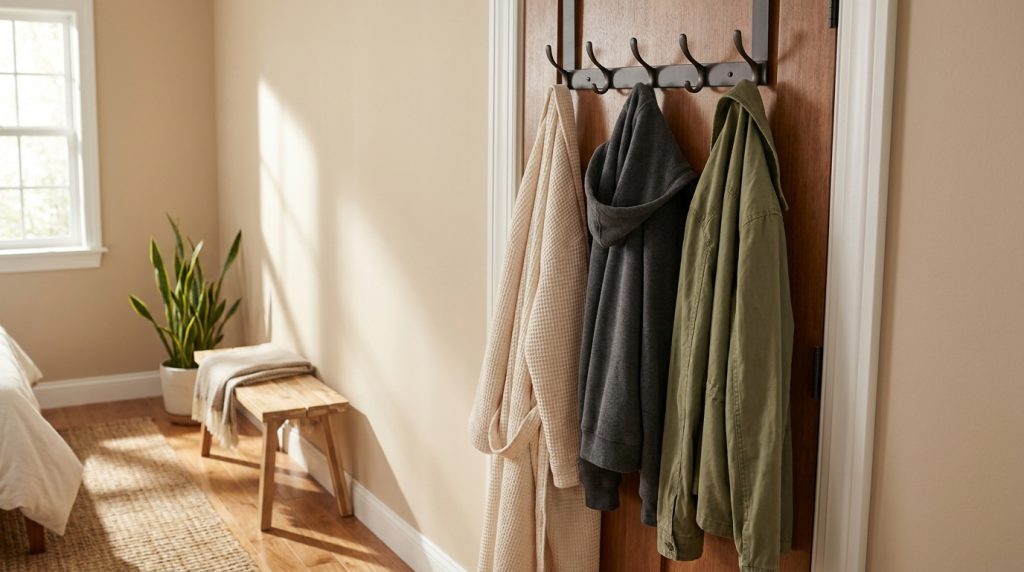
A hook zone can fail when everything shares one peg.
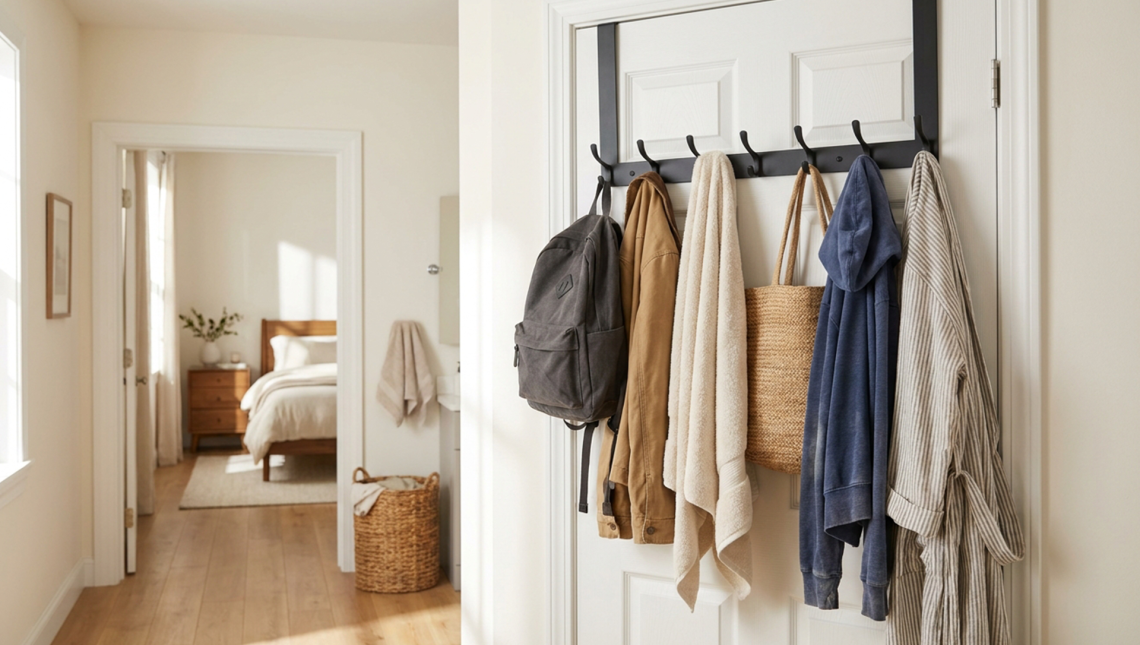
Robes, hoodies, light jackets, and lounge layers are easy to toss over chairs because they are used again soon. A dedicated over-door hook zone keeps them visible without mixing them into clean closet storage or laundry. The small detail that matters is spacing. When several bulky items share one hook, the pile can look messy and items may not air out well. In many U.S. homes, two or three clearly assigned hooks work better than a crowded row. One robe hook, one jacket hook, and one “leaving soon” hook can keep the setup easy to read at a glance.
The Garage Door Hook for Light Outdoor Gear
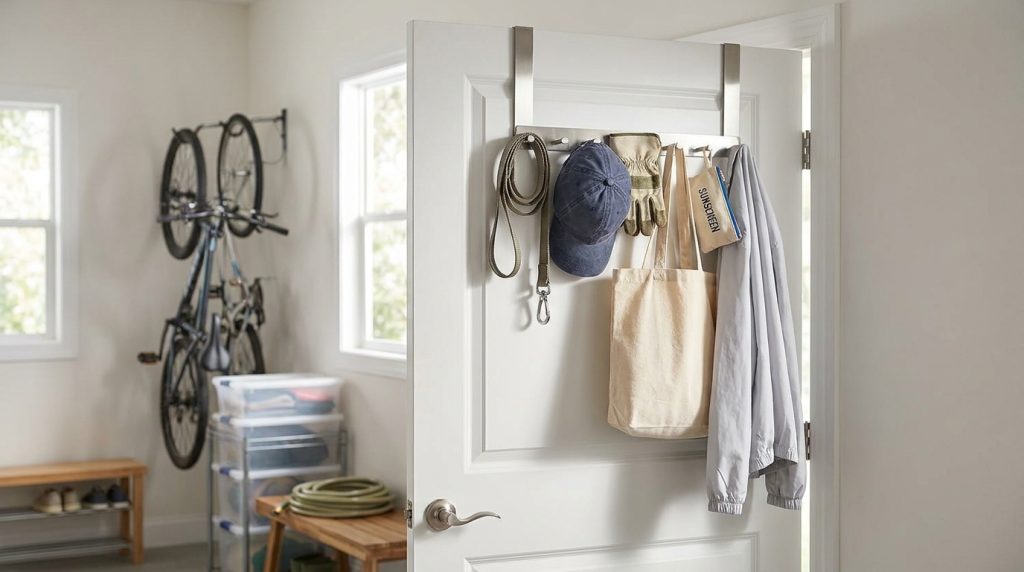
The garage-entry door may be an overlooked grab-and-go spot.
Near the garage, small outdoor items often scatter: dog leashes, caps, gardening gloves, reusable totes, sunscreen pouches, or kids’ outdoor accessories. A light-duty over-door hook can create a simple grab-and-go station without adding another shelf. The safest visual and practical version keeps it light and tidy. Avoid heavy tools, sharp items, or anything that could swing into the doorframe. When used for soft, everyday gear, the garage-entry door can save time before errands, yard work, school pickup, or a quick walk around the neighborhood.
The Hook Limit That Stops Doors From Becoming Clutter Walls
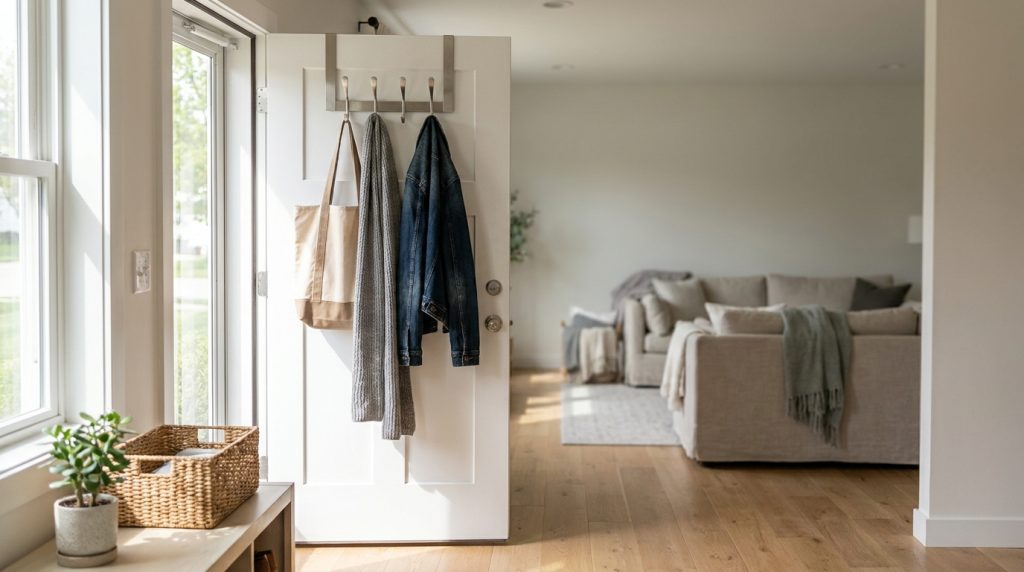
More hooks do not always mean a better door.
The most useful over-the-door setup usually has a limit. Without one, a helpful hook rack can slowly become a hanging clutter wall filled with old bags, extra scarves, mystery totes, and clothes that never move. A simple rule keeps it working: assign each hook a purpose, leave at least one hook open, and reset the door once a week. Before installing anything, check that the door still closes smoothly and that the rack does not rub trim or paint. The goal is not to hide more stuff; it is to make everyday items easier to see, grab, and return.