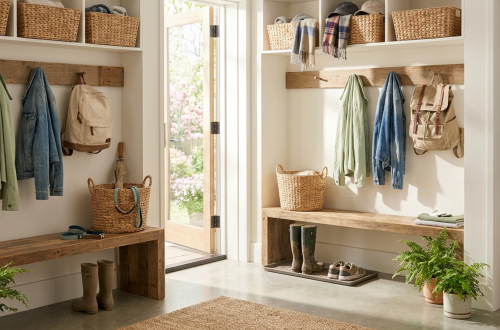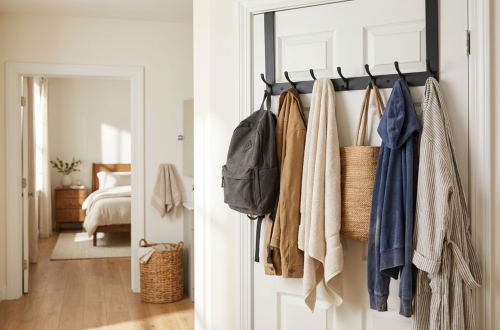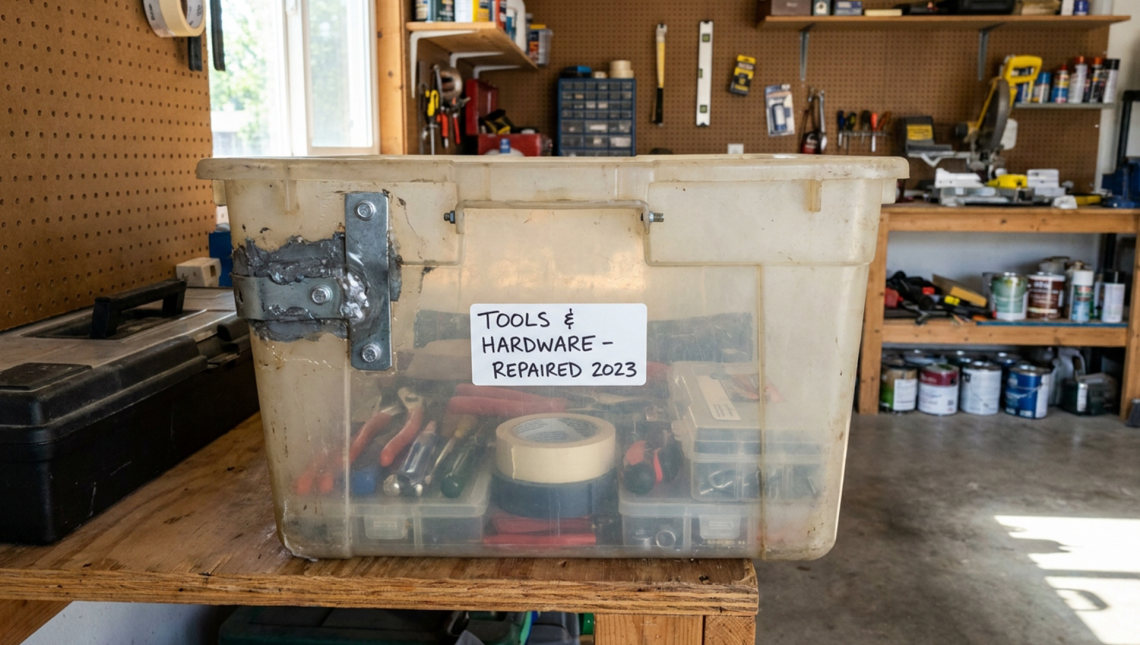
The problem with storage bins in many U.S. homes isn’t always the bin itself — it’s what happens after months of quick cleanups, hurried put-backs, fading labels, cracked handles and mystery lids that no longer match. What begins as a neat closet or garage system can slowly deteriorate into a frustrating pile of half-working containers that people stop using correctly. The good news is that many older bins may not need to be replaced immediately. A simple label-and-repair setup with everyday supplies can help make closets, laundry rooms, garages and pantry shelves feel easier to manage again, while helping existing organisers last longer. It is not perfection that is useful. It is making the system easier to recognise, easier to carry and easier to reset before clutter quietly spreads again.The little frustration often starts when nobody knows what is in the bin anymore. Many U.S. homes start out with storage systems that work great, but then become more difficult to maintain as labels peel, lids come apart or cracked handles make bins awkward to carry. The surprising thing is that many of the older organisers still work perfectly fine with a few small resets. A simple label and repair setup can make closets, garages, laundry rooms and pantry shelves feel easier to manage again without turning the project into another expensive storage haul.
Why Clear Labels Often Matter More Than Matching Containers
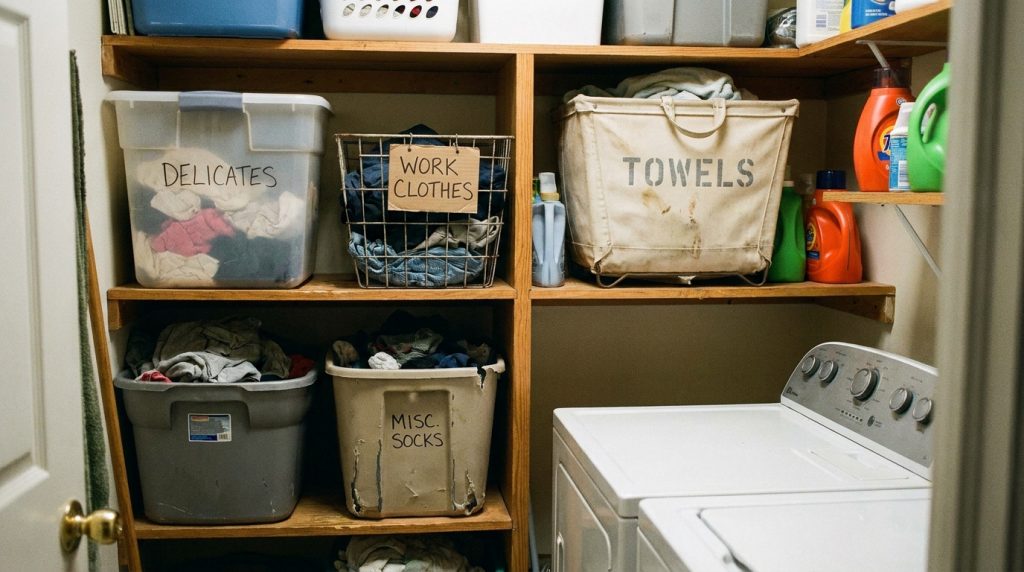
The useful shift is often when people stop using memory by itself. In busy homes, unlabelled bins can slowly become “miscellaneous” holders that no one wants to open. Most often, a large, legible label dispels the doubt that leads to piles accumulating nearby instead.The trick is not to make the labels look perfect — it is to make them easy to find quickly. In many U.S. garages and laundry rooms, simple white labels with bold black print tend to work better than decorative tags that fade into the background. The easier the label is to read from a few feet away, the more likely the system continues to work during rushed weekdays.What surprises many is how often categories quietly shift over time. After one busy season that same bin labelled “winter gear” can slowly turn into a mishmash of batteries, extension cords and random sports stuff. Changing labels when seasons change can help keep bins from becoming catch-all storage areas that are hard to maintain later.
The Small Cracks and Loose Handles That Usually Get Ignored First
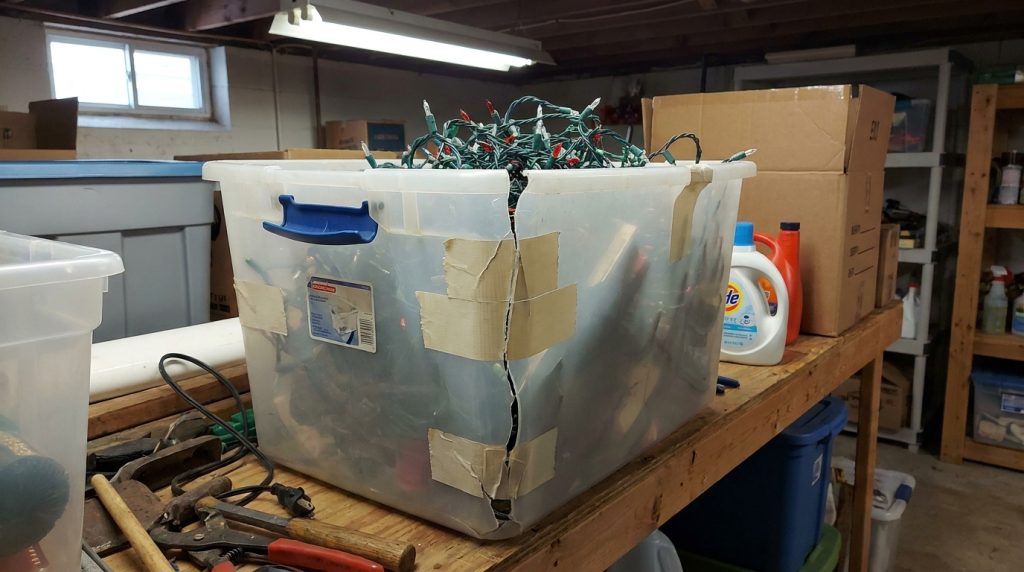
A little damage can often seem harmless until the bin becomes hard to carry comfortably. Cracked handles are one of the first reasons storage systems slowly stop working in many American homes. Once people feel awkward carrying the bin, they are more likely to leave items out rather than put them back straight away.The good news is that a lot of little problems just need a little bit of reinforcement to keep them manageable longer. Older bins can be kept in service with neutral repair tape, adhesive patches or replacement label sleeves for seasonal storage, laundry supplies or garage overflow items.What catches people out is how quickly small cracks can develop when bins are overloaded. Heavy holiday decorations, bottled cleaners or dense pantry goods can put extra stress on corners and handles over time. Seasonal cleanouts can reveal weak spots in bins before the next heavy carry across the house.
Why “Temporary Piles” Often Start Near Hard-to-Use Bins
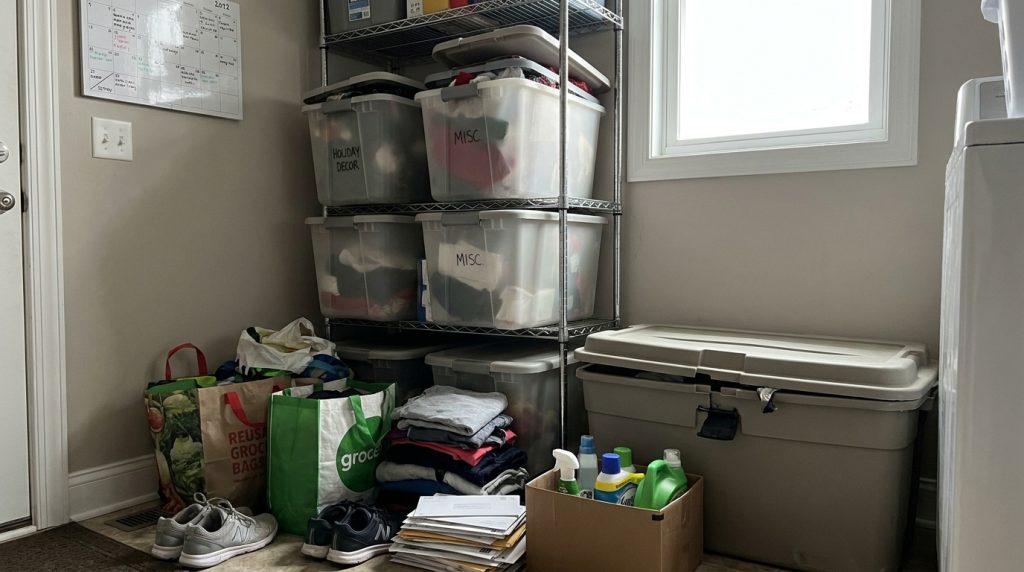
Usually the clutter starts next to the system, not inside it. Over time, lids don’t fit, or stacked bins become a pain to move in daily routines, and temporary piles appear in many American homes. Busy mornings or grocery runs often lead people to put things down nearby “for now” and then forget them.The helpful shift is often less buying of containers rather than more. A lower shelf, a lid that is easier to get on or a lighter bin load can make the system feel usable again. Even simple changes, such as placing the most-used bins at waist height, can make laundry rooms and closets easier to keep organised during hectic weekdays.What is often mistaken for laziness is just inconvenience accumulating over time. Eventually the storage set up where you have to move three heavy bins to get to one small item stops working. It is often more important to make bins easier to reach, easier to carry, easier to identify than it is to perfectly match containers.
The One-Supply Drawer That Helps the Setup Stay Maintained
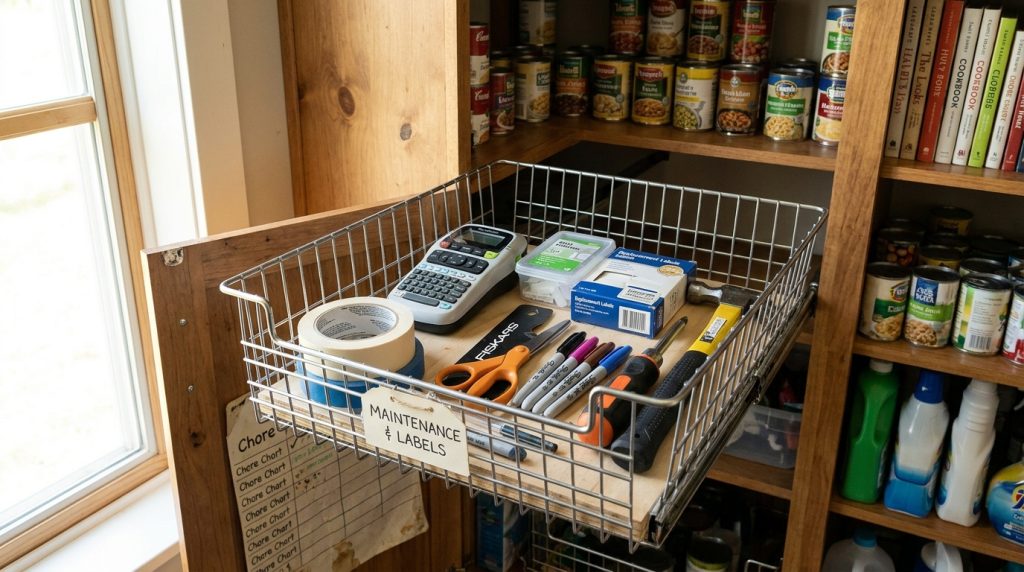
Usually, the easiest systems to look after are those with supplies close at hand. Many American homes are plagued by minor repairs that are put off because no one wants to spend time searching the house for tape, markers or replacement labels during a cleaning spree.The useful configuration can be surprisingly simple. A small basket or drawer with label paper, scissors, markers, clear tape and adhesive patches will often take the friction out of small maintenance tasks piling up later. Once the supplies are easy to grab, the storage system quickly starts to feel frustrating again, and you’ll often resort to quick fixes.The best thing is to keep the repair routine light. In general, people are more likely to refresh one label or reinforce one corner during routine household resets than to commit a full weekend to an organization project. It is easier to maintain something when you maintain it as part of your routine.
Why Older Bins Sometimes Work Better After a Simple Reset
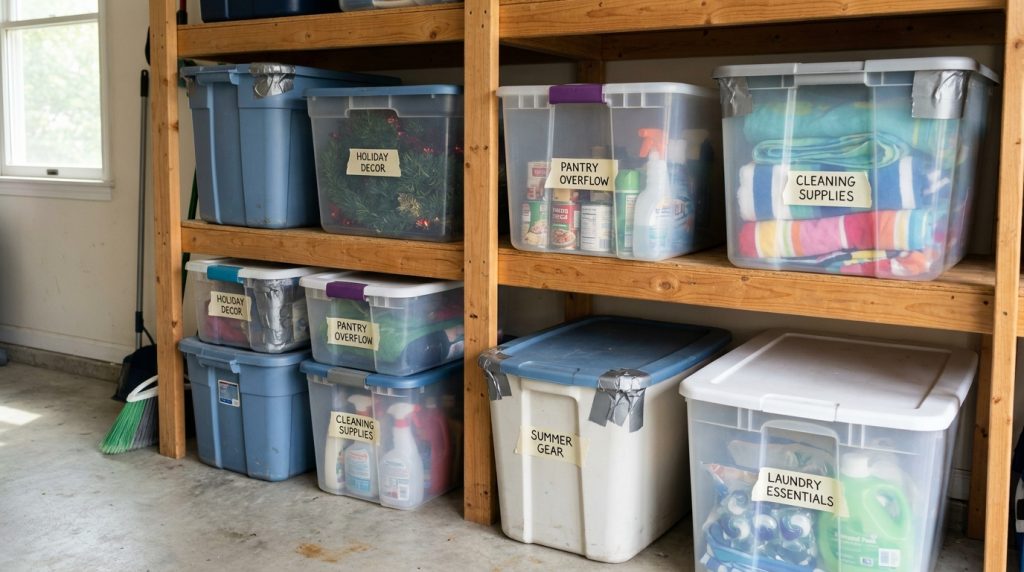
It’s surprising how much storage systems already have what people need. Typically, the problem is visibility and usability, not a lack of containers in a typical American garage, pantry or closet. Older bins can suddenly feel functional again when labels become easier to read and damaged spots are repaired.Usually the beneficial difference is by reducing visual confusion. Shelves can look more orderly without the expense of organisers when you use matching lids, grouped categories, and labels you can read. Even slightly battered bins often look more purposeful when the system around them is easier to follow.The way to keep the setup going longer is to make resets a part of normal routines, not something you do when you’ve hit total clutter overload. A quick seasonal check for cracked handles, faded labels and overloaded bins can keep the system usable until frustration builds again.The useful bit is not turning storage into a picture-perfect project. It’s the little things, quietly making our everyday routines harder over time. When bins are more recognisable, more portable and more manageable, even older organisers can help make closets, garages and laundry rooms feel calmer and less cluttered, without another major shopping trip.